Through Food, We Can Find Home—From Earth to Plate (From Fermentation to Earth ovens. Explore how ancient culinary techniques are used to create the food we love)


Hey Skinnies! How are you all doing?
From my side—big news from the concrete jungle! The love of my life and I have finally found a little gem of a place where we’ll be cohabitating. Yup, exciting times ahead! That’s what’s been cooking on my end.
Now let’s dive into this week’s blog!

We’re going back in time—to the ancient cooking methods that still make our food taste amazing today. Techniques so legendary, they’ve been sworn in by Michelin-star chefs and kept alive by home cooks around the globe. This one’s a tribute to the old-school methods that have stood the test of time and made global flavors what they are today—bold, authentic, and unforgettable.
We’re talking about taking multicultural ingredients gifted to us by Mother Earth, and turning them into flavors so mind-blowing, they’ll have you booking a flight just to experience them at the source.
Buckle up, let’s go!

Whether you’re from the West, the East, the North, or the South, these ancient techniques are bound to stir a memory that feels like home. Let’s explore earth ovens, smoking, roasting over open fires, steaming, fermentation, and pickling.
🌍 What Are Earth Ovens?
Skinny readers, imagine this: a hole in the ground that transforms into a slow-cooking, flavor-infusing powerhouse. Earth ovens—or pit ovens—are one of the oldest cooking methods known to humankind. They’re still used today for their ability to cook food slowly and evenly while imparting a rich, smoky, earthy flavor.

This technique is practiced across the globe—like by the Māori people of New Zealand. A prime example? Chef Cristina Martinez, who brought her family’s barbacoa tradition from Capulhuac, Mexico, all the way to South Philly. At South Philly Barbacoa, she slow-cooks lamb in an earthen pit lined with agave leaves. That’s earth oven magic right there.
🔥 What Is the Smoking Method?
This one dates way back to the Paleolithic era—yes, seriously! Smoking was used to preserve and flavor food using smoke from burning wood. The low-and-slow technique not only tenderizes meat but adds a distinct smoky punch that’s hard to beat.

Today, it’s a staple in everything from meats and fish to cheese and veggies. One modern legend who’s mastered it? Chef Lennox Hastie in Australia. He uses wood-fired cooking to craft flavors that are raw, primal, and unforgettable.
💨 What Is the Steaming Method?

Steaming is another ancient technique still winning hearts and kitchens today. It’s healthy, preserves nutrients and moisture, and delivers food that’s tender and naturally flavorful.

From ancient hot springs to bamboo baskets, steaming has always been a go-to. Michelin-starred Chef Chan Kwok-Wan of YinYue Chinese Restaurant puts it best: “Any ingredient—seafood, meat, or veg—is suitable for steaming.” The result? A noticeably more vibrant and fresh taste, especially when using high-quality, fresh ingredients.
🧪 What Is Fermentation & Pickling?
Yoh! Skinnies, this one should ring a bell! If not, go revisit our earlier blog on fermented foods and how they changed my gut and my life. Around here, it’s a staple!
Fermentation, powered by microorganisms, can totally transform the flavor and texture of food—creating legends like kombucha, pickles, kimchi, and yogurt.

Pickling, on the other hand, uses acidic brines to preserve food and create that iconic tangy bite.Chef Sean Brock—known for his deep-dive into Southern cuisine—swears by these methods, especially when using heirloom ingredients and reviving old-school recipes from the American South.
And honestly, writing this has got me feeling all kinds of nostalgic. Let me throw in a quick memory my love Shadre once shared. Her gran, out in the Great Karoo, would bake homemade bread in a wood-fired oven. The whole family would gather round, waiting for that golden, crusty loaf to come out. Spreading warm butter over that bread? Pure joy.
From my own journey, I’ve got countless stories just like that—but let’s save those for another chapter.

Thanks for tuning in to another episode of the Skinny Chef Diaries Weekly Blog. Now let’s always find our way home, food is our source, our culture. Let the ancient flavours and techniques be our compass!
Although we’re moving places, let’s meet same time, same place next week. Most importantly—stay safe, stay healthy, and stay skinny!
Creative Director: Shadre Leonard
1
Searing the Beef
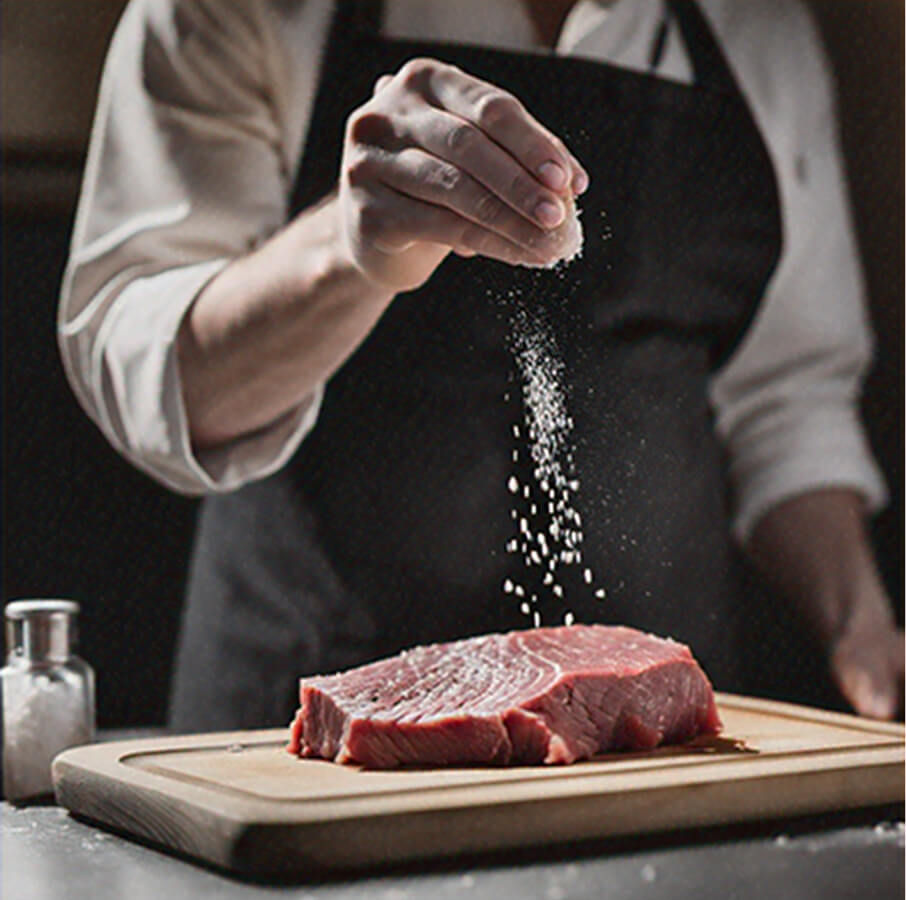
Sear beef fillets on high heat for 2 minutes per side to form a golden crust. Let it cool before proceeding to keep the beef tender.
1
Searing the Beef
Sear beef fillets on high heat for 2 minutes per side to form a golden crust. Let it cool before proceeding to keep the beef tender.
1
Searing the Beef
Sear beef fillets on high heat for 2 minutes per side to form a golden crust. Let it cool before proceeding to keep the beef tender.
1
Searing the Beef
Sear beef fillets on high heat for 2 minutes per side to form a golden crust. Let it cool before proceeding to keep the beef tender.
Notes


1
Season the good fresh beef fillets with salt and black pepper. Heat olive oil in a pan over high heat and sear the fillets for 2 minutes per side until it fully browned. Remove the beef from the pan and brush with a thin layer of mustard. Let it cool.
1
Season the good fresh beef fillets with salt and black pepper. Heat olive oil in a pan over high heat and sear the fillets for 2 minutes per side until it fully browned. Remove the beef from the pan and brush with a thin layer of mustard. Let it cool.
1
Season the good fresh beef fillets with salt and black pepper. Heat olive oil in a pan over high heat and sear the fillets for 2 minutes per side until it fully browned. Remove the beef from the pan and brush with a thin layer of mustard. Let it cool.
1
Season the good fresh beef fillets with salt and black pepper. Heat olive oil in a pan over high heat and sear the fillets for 2 minutes per side until it fully browned. Remove the beef from the pan and brush with a thin layer of mustard. Let it cool.
Instructions
Quality Fresh 2 beef fillets ( approximately 14 ounces each )
Quality Fresh 2 beef fillets ( approximately 14 ounces each )
Quality Fresh 2 beef fillets ( approximately 14 ounces each )
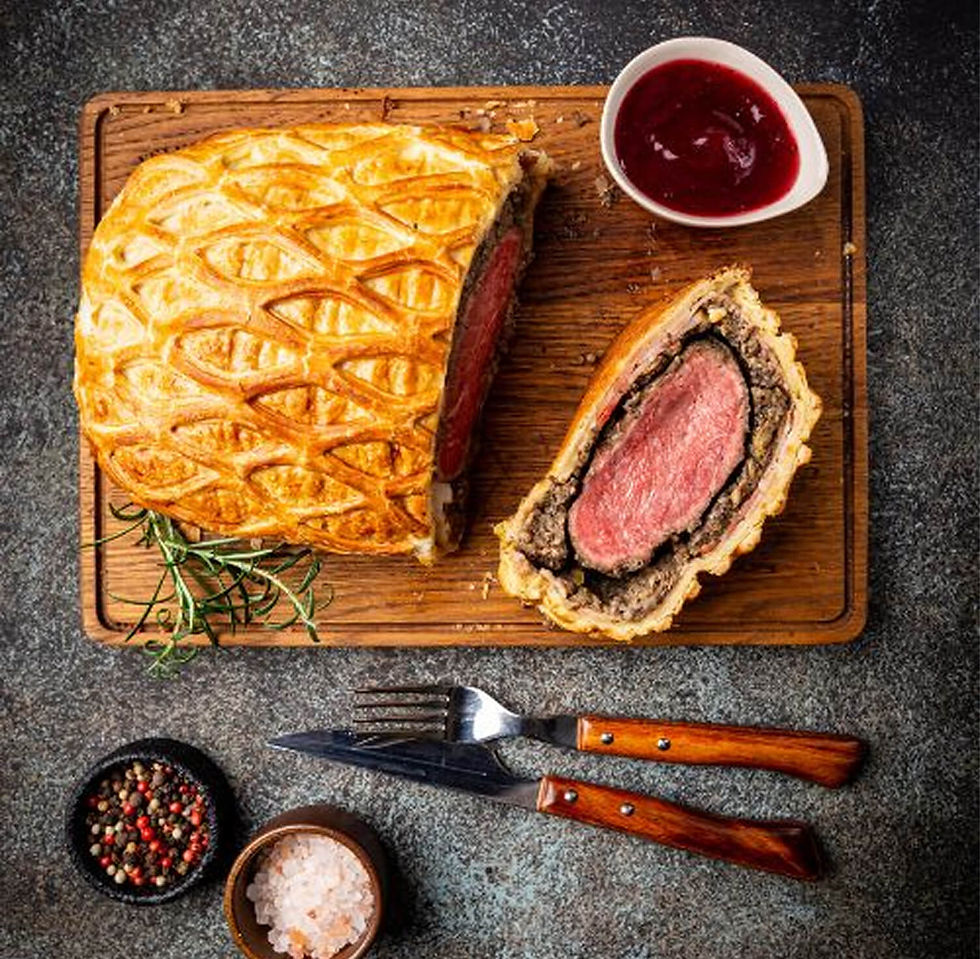
Beef Wellington
Beef Wellington
Fusion Wizard - Rooftop Eatery in Tokyo
Author Name
%20(1).jpg)
Beef Wellington is a luxurious dish featuring tender beef fillet coated with a flavorful mushroom duxelles and wrapped in a golden, flaky puff pastry. Perfect for special occasions, this recipe combines rich flavors and impressive presentation, making it the ultimate centerpiece for any celebration.
Servings :
4 Servings
Calories:
813 calories / Serve
Prep Time
30 mins
Prep Time
30 mins
Prep Time
30 mins
Prep Time
30 mins


Comments