Consistency During Change(Your relationship with food, focus, and how to micro-boost your brain in 30) seconds
- Chef Rod

- Feb 6
- 4 min read

Hey Skinnies 👋Welcome back to another epic edition of the Skinny Chef Diaries. I trust you’ve all had a fruitful, blessed week.
Before we dive into this week’s conversation, let’s do the ritual Skinny Chef thing and take a quick look at what’s happening on the global foodie calendar 🌍🍽️
This weekend, the South African Festival in Dubai is taking place at The Els Club, Dubai Sports City, from 3pm–11pm. Expect traditional braai (BBQ), proudly South African food stations, and a whole lot of home grown flavour. If you’re in Dubai, consider this your official nudge to make a pit stop.
It’s also National Fettuccine Alfredo Day in the US on 7 February and if you’ve been following my blogs for a minute now, you’ll know I have a deep appreciation for a good pasta moment 😌🍝
Alright let’s get back to why you’re really here.
Consistency During Change

Change stretches the brain before it stretches the schedule.
Shadre and I have recently experienced some changes in our lives. It hasn’t been easy, but we’ve become each other’s support system and in one way or another, those challenges have actually brought us closer than ever before.
New projects, new goals, new identities all require extra cognitive fuel. And if you’re naturally skinny, your body tends to borrow energy from tomorrow instead of asking loudly for more today. That’s when focus slips, moods flatten, and relationships quietly absorb the pressure.
Consistency during change isn’t about eating bigger meals.It’s about neurologically supporting your brain so you can stay present, patient, and aligned with your goals and your people.
The Science Skinny People Need to Know (But Rarely Hear)Your brain is small… but greedy.

Key facts:
The brain consumes 20–25% of your daily glucose
Cognitive stress (planning, decision-making, emotional regulation) increases glucose demand
Even slight undereating reduces:
Prefrontal cortex activity (focus & impulse control)
Serotonin production (mood stability)
Oxytocin signalling (connection & bonding)
Translation: If your brain isn’t fuelled, your relationships pay the price.
This is why “I’m fine, I forgot to eat” often shows up as irritability, zoning out, or emotional distance.
Consistency = Stable Blood Sugar = Better Relationships

Blood sugar dips don’t just cause hunger they:
increase cortisol
shorten emotional tolerance
reduce listening capacity
For skinny bodies, this happens faster because:
glycogen (stored glucose) reserves are smaller
metabolism is flexible, but less buffered
Micro-fuelling every 2–3 hours keeps your nervous system regulated, making you:
less reactive
more emotionally available
better at long-term thinking
The 30-Second Brain Micro-Boost (Science Edition)

Each of these targets a specific neurological pathway:
1. Glucose + Fat (Executive Function)

1 tsp almond or peanut butter + fruit
Fat slows glucose absorption → longer focus window🧠 Supports decision-making & patience
2. Sodium + Water (Neural Signalling)

A pinch of sea salt in water
Sodium is essential for nerve impulses🧠 Supports mental clarity & reduced brain fog
3. Protein Micro-Dose (Neurotransmitters)

2–3 bites of Greek yogurt or cottage cheese
Amino acids = dopamine & serotonin precursors🧠 Supports motivation & emotional balance
4. Dark Chocolate (Cerebral Blood Flow)

1–2 squares (70%+ cacao)
Flavanols increase blood flow to the brain🧠 Supports alertness & mood lift
⏱ Total time: 30 seconds📈 Result: smoother conversations, better focus, fewer emotional spikes
Skinny Chef Hacks: High Impact, Low Volume

These are chef-level efficiency moves no force-feeding, no bulk meals.
1. The Invisible Calories Rule

Add energy without increasing portion size:
Olive oil drizzle on anything
Butter or ghee melted into rice or veggies
Honey in tea, yogurt, or smoothies
Fat = 9 calories per gram, minimal volume.
2. The Two-Bite Rule

You don’t need a full snack.
Two bites every 90–120 minutes maintains glucose
Perfect during creative or work sprints
Consistency beats fullness.
3. Liquid First, Solid Later

Skinny nervous systems often prefer liquids under stress:
Smoothie before meals
Milk, kefir, or plant milk between tasks
Liquids digest faster → faster brain availability.
4. Relationship Fuel Stations

Place shared foods where connection happens:
Fruit + chocolate on the table
Nuts by the couch
Crackers near workspaces
Eating together — even briefly — stimulates oxytocin release.
5. Eat Before You Talk

Before:
difficult conversations
planning sessions
emotional check-ins
Low glucose = reduced empathy.Fuel first. Talk second.
Staying Aligned With Love While Building Something New

Ambition increases energy demand.Relationships require emotional regulation.Food is the bridge between the two.
Consistency doesn’t mean perfect routines. It means:
responding to your brain early
feeding before depletion
choosing nourishment as a leadership skill
Your body isn’t failing you by staying thin.It’s asking for strategic support.
Final Thought

Change asks more from you.Food helps you give more without burning out.
Fuel your brain.Protect your relationships.Stay consistent especially when life isn’t.
Thanks again for reading, Skinnies.Same time. Same place.Much love,Skinny Chef 🤍
Skinny Chef Recipe: 30-Second Brain Boost Yogurt Cup

Serves: 1 | Time: 30 seconds
Ingredients
½ cup full-fat Greek yogurt
1 tsp honey
1 tsp almond or peanut butter
1–2 squares dark chocolate (70%+), chopped
Pinch of sea salt
Method
Spoon yogurt into a bowl or cup.
Swirl in honey and nut butter.
Sprinkle with dark chocolate and a tiny pinch of sea salt.
Eat before meetings, conversations, or creative work.
🧠 Low volume. High impact. Brain-first fuel
Creative Director: Shadre Leonard
1
Searing the Beef
Sear beef fillets on high heat for 2 minutes per side to form a golden crust. Let it cool before proceeding to keep the beef tender.
1
Searing the Beef
Sear beef fillets on high heat for 2 minutes per side to form a golden crust. Let it cool before proceeding to keep the beef tender.
1
Searing the Beef
Sear beef fillets on high heat for 2 minutes per side to form a golden crust. Let it cool before proceeding to keep the beef tender.
1
Searing the Beef
Sear beef fillets on high heat for 2 minutes per side to form a golden crust. Let it cool before proceeding to keep the beef tender.
Notes


1
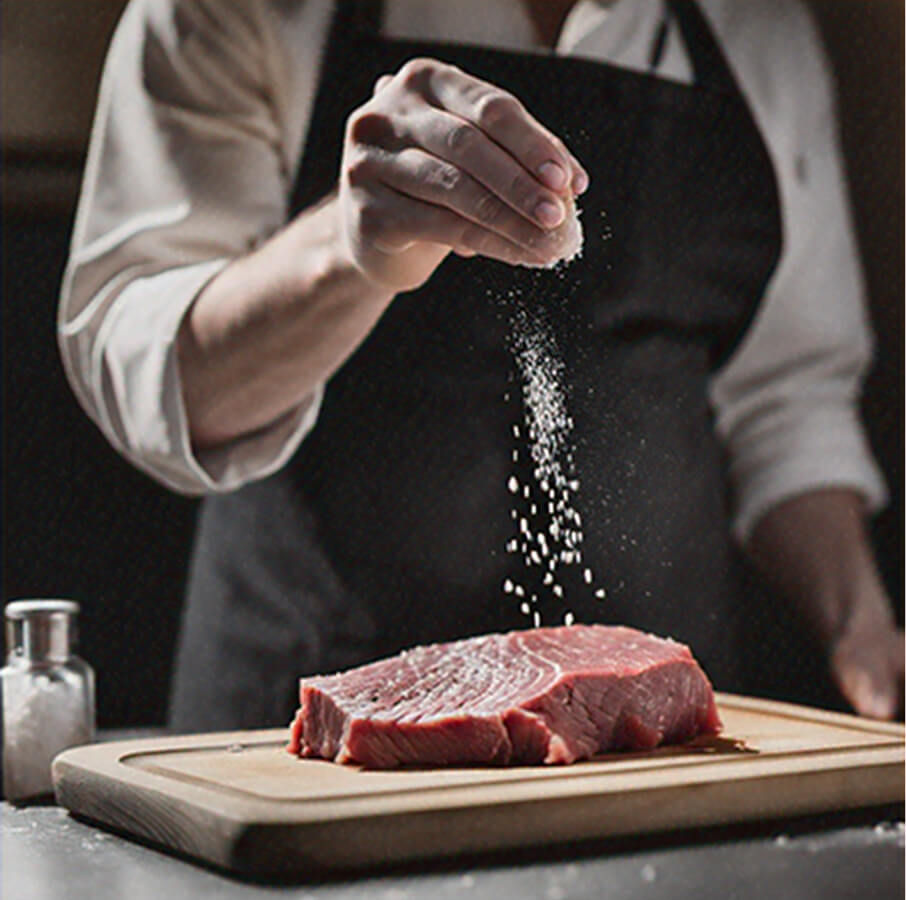
Season the good fresh beef fillets with salt and black pepper. Heat olive oil in a pan over high heat and sear the fillets for 2 minutes per side until it fully browned. Remove the beef from the pan and brush with a thin layer of mustard. Let it cool.
1
Season the good fresh beef fillets with salt and black pepper. Heat olive oil in a pan over high heat and sear the fillets for 2 minutes per side until it fully browned. Remove the beef from the pan and brush with a thin layer of mustard. Let it cool.
1
Season the good fresh beef fillets with salt and black pepper. Heat olive oil in a pan over high heat and sear the fillets for 2 minutes per side until it fully browned. Remove the beef from the pan and brush with a thin layer of mustard. Let it cool.
1
Season the good fresh beef fillets with salt and black pepper. Heat olive oil in a pan over high heat and sear the fillets for 2 minutes per side until it fully browned. Remove the beef from the pan and brush with a thin layer of mustard. Let it cool.
Instructions
Quality Fresh 2 beef fillets ( approximately 14 ounces each )
Quality Fresh 2 beef fillets ( approximately 14 ounces each )
Quality Fresh 2 beef fillets ( approximately 14 ounces each )
Beef Wellington
Beef Wellington
Fusion Wizard - Rooftop Eatery in Tokyo
Author Name
%20(1).jpg)
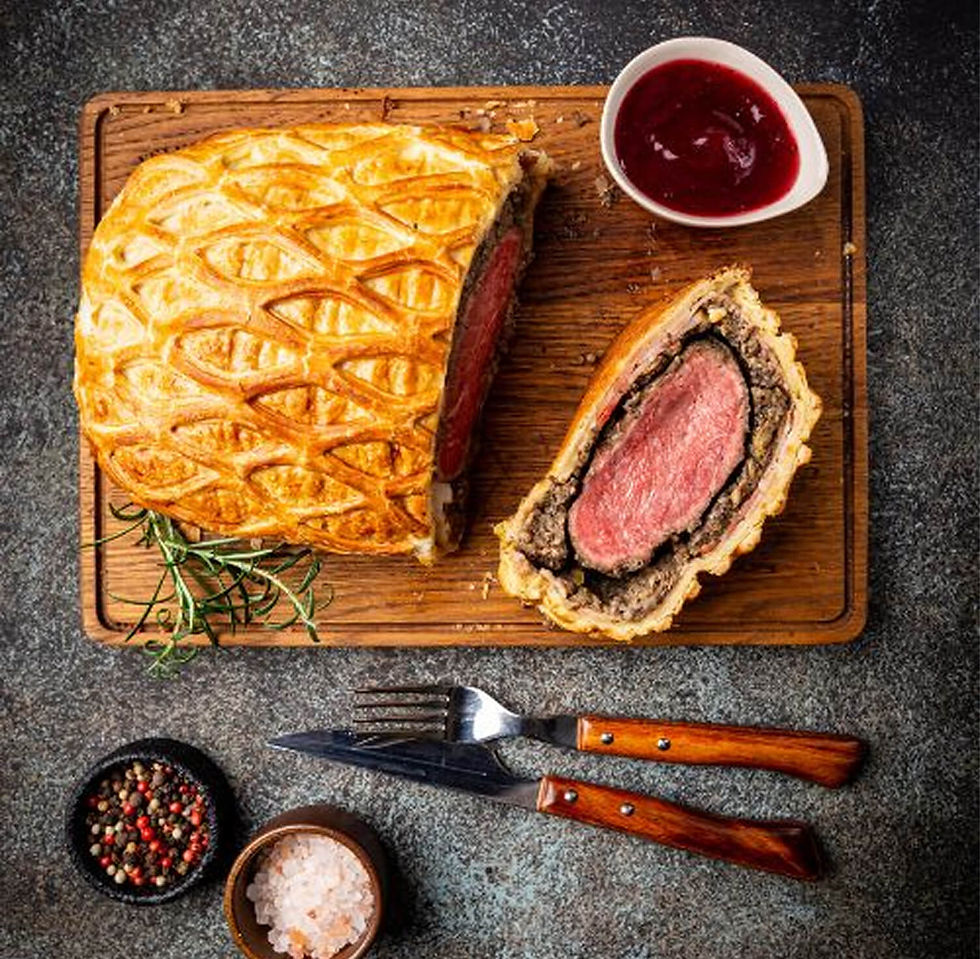
Beef Wellington is a luxurious dish featuring tender beef fillet coated with a flavorful mushroom duxelles and wrapped in a golden, flaky puff pastry. Perfect for special occasions, this recipe combines rich flavors and impressive presentation, making it the ultimate centerpiece for any celebration.
Servings :
4 Servings
Calories:
813 calories / Serve
Prep Time
30 mins
Prep Time
30 mins
Prep Time
30 mins
Prep Time
30 mins


Comments